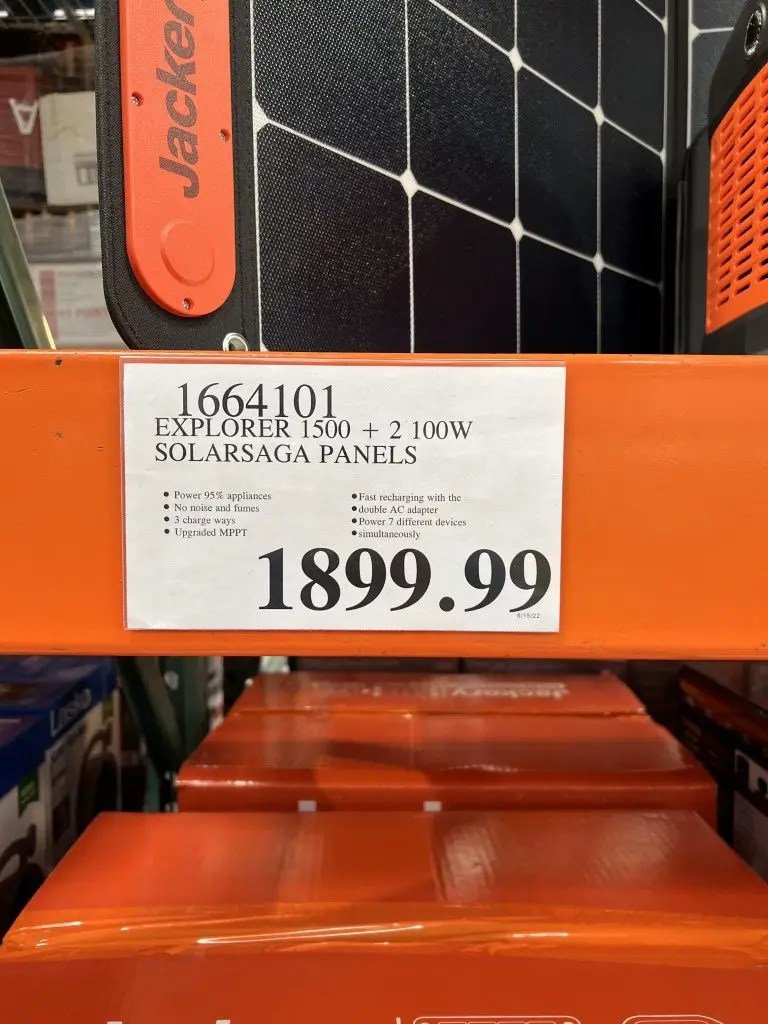
When you're looking to harness the sun's power, whether for weekend adventures, emergency preparedness, or even powering your home, understanding Solar Generator Use Cases & Setup from Costco is key. Costco, the retail giant known for its bulk savings, has quietly become a significant player in bringing solar solutions to its members, offering everything from grab-and-go portable units to comprehensive rooftop installations.
This guide isn't just about what Costco sells; it's about empowering you to make informed decisions, navigate the options, and confidently set up your new solar power system. Think of it as your seasoned expert friend, walking you through the practicalities of going solar with a side of Costco-sized insights.
At a Glance: Costco Solar Power Essentials
- Two Main Paths: Costco offers both portable solar generator kits (for emergencies, camping, off-grid) and professionally installed rooftop solar systems via Sunrun.
- Portable Powerhouses: Look for brands like Goal Zero, Lion Energy, and Energizer, offering capacities from 991 Wh to 3000 Wh, complete with solar panels for recharging.
- Rooftop Reliability: Sunrun provides full-service installation, monitoring, and robust warranties, with exclusive benefits for Costco members, including an enhanced roof penetration warranty.
- Costco Shop Card Perk: Members purchasing a Sunrun system with cash or loan can receive a Costco Shop Card worth 10% of the pre-tax equipment cost—a significant saving.
- Know Your Needs: Portable units are excellent for smaller loads and mobility; rooftop systems handle whole-home power. Your specific use case will dictate the best choice.
- Do Your Homework: While Costco offers convenience, always research specific product details, compare warranties, and read reviews, especially for large investments like rooftop solar.
Why Solar Power? And Why Look to Costco?
The sun beams down enough energy to power the entire planet many times over. Tapping into even a fraction of that can mean greater energy independence, lower utility bills, a smaller carbon footprint, and critical backup power when the grid falters.
So, why consider Costco for your solar journey? It boils down to a few core advantages:
- Trust and Convenience: Costco has a reputation for quality products and a generous return policy. This adds a layer of confidence to what can feel like a complex purchase.
- Member-Exclusive Value: From special pricing on portable kits to significant Costco Shop Card incentives for rooftop installations, being a member often means extra savings.
- Curated Selection: Instead of being overwhelmed by hundreds of options, Costco offers a more curated selection of reputable brands, simplifying the decision-making process.
Whether you're looking for a quick power fix or a long-term energy solution, Costco provides accessible entry points.
Deciphering Costco's Solar Offerings: Portable vs. Permanent
Costco effectively presents two distinct paths to solar energy, each suited for different needs and lifestyles. Let's break them down.
Path 1: Portable Power – Your Go-Anywhere Energy Solution
Portable solar generators are essentially large, rechargeable batteries paired with solar panels. They capture sunlight, convert it into electricity, and store it for later use. Think of them as giant, eco-friendly power banks for your life's adventures and emergencies.
Key Use Cases for Portable Solar Generators:
- Emergency Preparedness: This is perhaps the most critical use case. When a power outage strikes, a portable solar generator can keep your essential devices running—phones, medical equipment (like CPAP machines), radios, and even a small refrigerator for a limited time.
- Camping and RV Life: Free yourself from noisy, fuel-guzzling gas generators. A solar generator provides quiet, clean power for lights, fans, cooking appliances, and charging all your gadgets in the wilderness.
- Outdoor Events & Tailgating: Power speakers, blenders, or portable projectors without needing an outlet.
- Off-Grid Living (Small Scale): For sheds, workshops, or tiny homes that don't need extensive power, a robust portable unit can provide consistent, renewable energy.
- DIY Projects: Need power for tools in the backyard where outlets are scarce? A portable unit can bridge the gap.
Top Portable Solar Generator Kits You Might Find at Costco:
Costco typically features reputable brands known for their performance and durability. Here are some examples based on common offerings:
1. Goal Zero Yeti 3000X + Nomad 200 Solar Generator Kit
- What it is: A substantial power station combined with a high-efficiency solar panel.
- Specs at a glance: Boasts a 3,000-watt-hour (Wh) battery capacity, meaning it can deliver 3,000 watts for one hour, or 300 watts for 10 hours, etc. It's paired with a 200-watt (W) solar panel for recharging.
- Port Options: You'll typically find multiple AC outlets, various USB-A and USB-C ports, a 12V car port, and a high-power port (HPP) for more demanding devices.
- Ideal for: Serious emergency backup (running a fridge, microwave intermittently), extended camping trips, powering small cabins or RVs. It's an excellent choice for those needing significant power on the go.
2. Lion Energy Safari ME MAX Energy Kit
- What it is: A comprehensive system designed for greater flexibility and expandability, often including an expansion pack and inverter for increased capacity and capability.
- Specs at a glance: This kit often includes the main solar generator, an expansion battery, an inverter, and a series of 100-watt, 24-volt solar panels (e.g., six of them for a 600W total input).
- Designed for: Charging a wide array of electronics, powering LED lights, and catering to small-scale home, RV, or boat needs. Its modular design allows for greater customization.
- Ideal for: Users who need more sustained power than a typical portable unit, perhaps for extended off-grid living or as a more robust home backup solution for essential circuits.
3. Energizer Ultimate PowerSource Pro Battery Generator and Solar Panel Bundle
- What it is: A more compact, yet capable, option emphasizing portability and quick recharge.
- Specs at a glance: Weighing around 23 pounds, it offers a 991-watt-hour (Wh) capacity, making it highly portable. It comes with a 200-watt foldable solar panel.
- Features: Can charge up to seven devices simultaneously and boasts a rapid recharge time of under two hours via an AC port.
- Ideal for: Light to medium-duty emergency power, day trips, beach outings, or anyone needing quick, reliable power without the bulk. Its portability is a major selling point.
What to Look for in a Portable Kit: Your Decision Checklist
When you're browsing the options, keep these factors in mind:
- Capacity (Wh): This tells you how much energy the battery can store. Higher Wh means more power for longer. Match this to what you need to run.
- Output Power (W): This indicates how much power the unit can deliver at one time. Make sure it can handle the starting (surge) and running watts of your devices.
- Port Variety: Do you need AC outlets for household appliances, USB ports for phones, or a 12V car port?
- Portability: Consider weight and size if you plan to move it frequently.
- Recharge Time: How quickly can it recharge via solar, AC, or car? A faster AC recharge is great for emergencies.
- Solar Panel Efficiency: How many watts can the included panel generate? More watts means faster solar recharging.
- Expandability: Can you add more batteries or panels later if your needs grow?
For a deeper dive into choosing the right model, be sure to check out your Costco solar generator guide.
Shipping and Warranties for Portable Units
Portable solar generator kits from Costco are generally available for shipping across the contiguous U.S. states, with exceptions often including Puerto Rico, Alaska, and Hawaii due to shipping complexities for large batteries. Warranties will vary by the manufacturer (Goal Zero, Lion Energy, Energizer, etc.), typically ranging from 1 to 5 years. Costco's famously lenient return policy usually provides an added layer of buyer protection, but always confirm the specifics for electronics.
Path 2: Home Integration – Rooftop Solar via Sunrun at Costco
For those looking to power their entire home, reduce or eliminate utility bills, and potentially increase home value, a professionally installed rooftop solar system is the way to go. Costco partners with Sunrun, one of the largest solar providers in the U.S., to offer members a streamlined path to home solar.
Is Rooftop Solar Right for You?
Rooftop solar is a significant investment, but it can offer substantial long-term savings and environmental benefits. Consider it if you:
- Own your home and plan to stay there for several years.
- Have a roof suitable for solar (good sun exposure, good condition).
- Want to reduce or eliminate your monthly electricity bill.
- Are interested in potential tax credits and local incentives.
- Desire energy independence and backup power (especially if paired with a home battery).
The Sunrun at Costco Package: What You Get
When you opt for a Sunrun solar system through Costco, you’re getting a comprehensive service, not just equipment:
- High-Quality Solar Equipment: This includes solar panels, inverters, and racking designed for efficiency and durability.
- Professional Installation: Sunrun handles the entire installation process, from design to permitting to mounting the panels.
- System Monitoring: Most Sunrun systems include monitoring to ensure your system is performing optimally.
- Robust Warranties: Sunrun provides a 20-year workmanship warranty (covering the installation itself) and a 10-year roof penetration warranty (protecting against leaks where panels are mounted).
Exclusive Costco Benefits & The Shop Card Offer
This is where being a Costco member really pays off for rooftop solar:
- Enhanced Warranty: Costco members receive an additional 5 years on the roof penetration warranty, extending it from 10 to a total of 15 years.
- Premium Upgrade Option: For those seeking maximum peace of mind, upgrading to Sunrun’s "premium Base Plus" offering extends both roof penetration and system monitoring to a full 25 years.
- The Costco Shop Card Promotion: This is a major perk. Members who purchase a qualifying Sunrun system with a cash payment or a loan (leases and power purchase agreements are excluded) receive a Costco Shop Card. The value? A generous 10% of the pre-tax equipment cost. This covers the panels, racking, inverters, and any batteries, though it explicitly does not cover installation costs. For a multi-thousand-dollar system, this can translate into a Costco Shop Card worth thousands of dollars – a significant bonus for your next warehouse run!
State Availability for Sunrun Rooftop Solar
Sunrun's services via Costco are available in specific states. You can explore this option if you reside in one of the following 18 U.S. states:
- Arizona
- California
- Colorado
- Connecticut
- Florida
- Hawaii
- Illinois
- Maryland
- Massachusetts
- New Hampshire
- New Jersey
- New Mexico
- New York
- Nevada
- Pennsylvania
- South Carolina
- Texas
- Vermont
If your state isn't on this list, a Sunrun system through Costco isn't an option for you at this time, but portable units are still widely available.
Navigating Sunrun Customer Reviews (with a Costco Lens)
Sunrun, like any large company, receives a wide range of customer reviews. On average, they hold around 3.5 out of 5 stars from thousands of reviews. However, when looking specifically at reviews from Costco customers, the feedback is quite polarized: approximately 45% are 5-star, but a substantial 40% are 1-star. The remaining reviews fall in the middle.
What does this polarization mean for you?
Common themes in these reviews include:
- Customer Service: Some report excellent support, others frustrating communication or follow-up issues.
- Pricing: While the Costco Shop Card is a perk, overall system pricing can be a point of contention for some.
- Installation: Experiences range from smooth and professional to delays or quality concerns.
- Warranties: Generally, the warranties are well-regarded, but navigating claims can be an issue for some.
Your takeaway: The Costco partnership can offer potential cost savings and the backing of Costco's customer service reputation. However, the polarized reviews underscore the importance of due diligence. Get multiple quotes, thoroughly understand your contract, clarify all warranty terms, and read the fine print. Don't rely solely on the Costco brand; engage directly with Sunrun and ask all your questions before committing.
Setting Up Your Costco Solar Generator (Portable Units)
One of the great appeals of portable solar generators is their relative ease of setup. You don't need an electrician or a permit—just open the box and follow a few steps.
1. Unboxing and Initial Charge
- Inspect: Carefully unbox your unit and panels. Check for any shipping damage.
- Read the Manual: This is crucial. Every unit has specific quirks and safety guidelines.
- Initial Charge: Before its first solar use, most manufacturers recommend fully charging your new generator via a wall outlet (AC port). This ensures the battery is balanced and ready for optimal performance. This is also often the fastest way to get to 100%. For instance, the Energizer Ultimate PowerSource Pro can fully recharge in under two hours via AC.
2. Connecting Solar Panels
- Unfold/Assemble: If your panels are foldable, unfold them. If they require assembly (like the Lion Energy kit's individual panels), follow the instructions.
- Position for Sun: Place your solar panels in direct sunlight. Avoid shade from trees, buildings, or even small objects on the panel's surface, as this significantly reduces efficiency. Angle them towards the sun for maximum capture.
- Connect to Generator: Locate the solar input port on your generator (often marked "Solar Input" or "MPPT Input"). Connect the solar panel's output cable to this port. Your generator should indicate that it's receiving a charge (e.g., a charging light, an input wattage display).
3. Powering Your Devices
- Plug In: Simply plug your devices into the appropriate ports on the solar generator (AC outlets for appliances, USB for phones, 12V for car accessories).
- Turn On Outputs: Many generators require you to press a button to activate the AC or DC output ports before they will supply power.
- Monitor Usage: Keep an eye on the display. It will often show input wattage (from solar), output wattage (to your devices), and the remaining battery percentage. This helps you manage your power consumption.
4. Best Practices for Longevity and Performance
- Avoid Overloading: Don't try to power appliances that draw more watts than your generator's rated output. This can trigger safety shutdowns or damage the unit.
- Optimal Solar Angle: Adjust your panels throughout the day to track the sun, especially during long charging sessions.
- Keep it Cool and Dry: Store and operate your generator in a well-ventilated area, away from direct extreme heat or moisture.
- Regular Use/Charging: Batteries perform best when used regularly. Avoid letting the battery sit completely depleted for extended periods. If storing for a long time, aim for a 50-80% charge.
- Clean Panels: Periodically wipe down your solar panels to remove dust, dirt, or debris that can reduce efficiency.
Understanding these basic setup and usage tips will help you maximize the utility and lifespan of your portable solar generator from Costco. For more detailed instructions on specific models, refer to your complete guide to Costco solar generators.
Costco Solar FAQ: Your Burning Questions Answered
We’ve covered a lot of ground, but you likely still have some practical questions. Here are answers to common queries about solar solutions from Costco.
Can a portable solar generator really power my refrigerator during an outage?
Yes, many larger portable solar generators, like the Goal Zero Yeti 3000X, have enough capacity (Wh) and output (W) to run a standard refrigerator. However, it's not designed to run it continuously for days on end without significant solar recharging. A fridge typically uses power intermittently. You'll need to cycle it on and off, or ensure consistent sun to replenish the battery. Always check your fridge's starting and running wattage against the generator's specs.
What's the difference between Watt-hours (Wh) and Watts (W) and why does it matter?
- Watts (W): This measures instantaneous power—how much energy a device uses or a panel produces at any given moment. Think of it as speed.
- Watt-hours (Wh): This measures energy capacity or consumption over time. It's how much energy a battery can store or how much a device uses over an hour. Think of it as distance.
Why it matters: You need enough Watts from your generator to run your devices (e.g., a 1000W microwave needs a generator with at least 1000W output). You need enough Watt-hours in your battery to run those devices for the duration you need (e.g., a 100Wh device running for 10 hours needs a 1000Wh battery).
How long do these portable units typically last?
The lifespan of a solar generator's battery is usually measured in "charge cycles." Most modern lithium-ion batteries in these units are rated for 500 to 2000 cycles to 80% capacity. This means you can fully charge and discharge it hundreds or even thousands of times before its capacity significantly degrades. With proper care and storage, a quality unit can last 5-10 years or more.
Is the Costco Shop Card promotion for Sunrun worth it?
Absolutely, if you meet the criteria! A 10% Shop Card on the pre-tax equipment cost of a rooftop solar system can easily amount to thousands of dollars. For example, on a $30,000 equipment portion of a system, that's a $3,000 Costco Shop Card. This effectively lowers your out-of-pocket cost and is a tangible, immediate benefit that many other solar providers don't offer. Just remember it's for cash or loan purchases only, not leases or PPAs.
What about maintenance for portable solar generators?
Maintenance is minimal. Keep the unit clean, especially the solar panels. Store it in a cool, dry place. Charge it to 50-80% before long-term storage, and recharge it every 3-6 months to prevent the battery from fully depleting, which can reduce its lifespan. Essentially, treat it like any valuable electronic device, and it will serve you well.
Making Your Solar Decision: Portable vs. Rooftop
Deciding between a portable solar generator and a rooftop solar system through Costco depends entirely on your specific needs, budget, and long-term goals. Here’s a quick comparison to help clarify.
| Feature | Portable Solar Generator Kits (Costco) | Rooftop Solar System (Sunrun via Costco) |
|---|---|---|
| Primary Use | Emergency backup, camping, RVs, outdoor events, small off-grid needs | Whole-home power, utility bill reduction, energy independence, home value |
| Cost | Generally $500 - $3,000+ (one-time purchase) | Generally $15,000 - $40,000+ (significant investment) |
| Setup | DIY, plug-and-play, immediate use | Professional installation required, permits, utility connection |
| Power Output | Limited to specific devices, generally smaller loads | Powers entire home, handles major appliances and HVAC |
| Portability | Highly portable, easy to move | Permanent, fixed installation on your roof |
| Benefits | Quick power anywhere, quiet, clean, emergency preparedness | Long-term savings, environmental impact, increased home value, grid independence |
| Drawbacks | Limited capacity, slower recharge from solar alone, not a whole-home solution | High upfront cost, long-term commitment, dependent on roof suitability, installation process |
| Costco Perk | Member-only pricing, convenient access | Enhanced warranty, substantial Costco Shop Card for cash/loan purchases |
| Availability | Most contiguous U.S. states | Limited to 18 specific U.S. states |
| If you're still weighing the options, consider what truly drives your need for solar. Is it flexible power for various scenarios, or a fundamental shift in your home's energy consumption? |
The Road Ahead: Powering a Brighter Future
Whether you choose the versatile portability of a Goal Zero Yeti or Energizer kit, or the foundational change of a Sunrun rooftop system, Costco offers accessible avenues to solar energy. The convenience, member benefits, and trusted brand association make it a compelling starting point for many.
Before making your final decision, especially for a significant investment like home solar, remember to:
- Assess Your Needs: How much power do you truly need? For how long? What devices are critical?
- Compare Specific Models/Quotes: Don't just go with the first option. For portable units, compare specs. For rooftop, get multiple bids and scrutinize contracts.
- Understand the Full Costs: Factor in not just the purchase price, but also any installation fees, potential tax credits, or the value of the Costco Shop Card.
- Read the Fine Print: Pay close attention to warranties, return policies, and service agreements for both portable and rooftop solutions.
- Leverage Costco's Support: Don't hesitate to reach out to Costco Concierge Services or Sunrun directly with any questions before, during, or after your purchase.
Embracing solar power, even in a small way with a portable generator, is a step towards greater resilience and a more sustainable future. With Costco as a partner, that journey becomes a little more straightforward and potentially a lot more rewarding. Dive into the details and power up your life with the sun! And for every specific question you might have, remember your comprehensive Costco solar generator guide is here to help.